
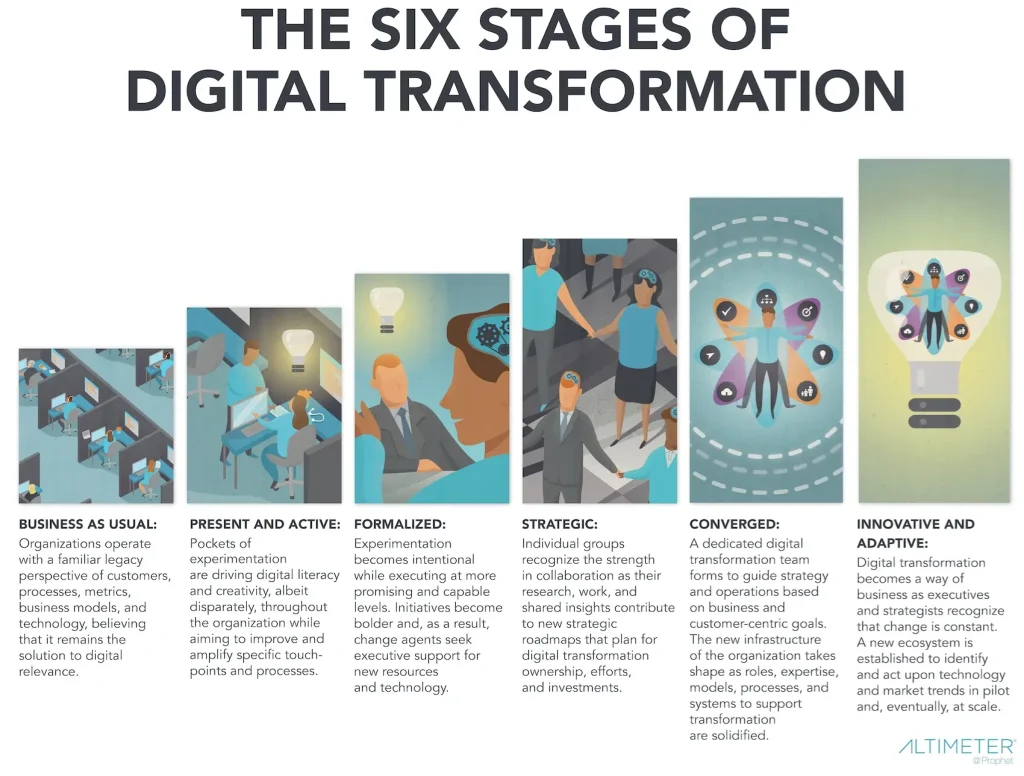
Digital Transformation is no longer a luxury; it’s a strategic imperative that shapes how modern businesses compete, innovate, and grow. In a world where customer expectations evolve rapidly and technology becomes a core differentiator, organizations must move beyond pilots to embrace a digital transformation strategy aligned with a practical technology roadmap. This holistic shift centers on people, processes, and governance, guiding business process optimization and measurable outcomes rather than technology for its own sake. The emphasis on data, security, and user experience helps ensure that digital capabilities scale beyond pilot projects. Ultimately, organizations that treat transformation as an enterprise-wide program see faster time-to-value and resilient growth.
An alternative framing is digital modernization, where technology upgrades are woven into strategy rather than treated as isolated projects. This journey also maps to enterprise digitization, focusing on data platforms, automation, and intelligent workflows that align with business goals. A technology-centered approach that emphasizes IT modernization, governance, and cross-functional collaboration helps organizations translate capability into value. Seen through the lens of a data-driven evolution, leadership, and continuous learning, teams align digital initiatives with customer outcomes and operational resilience.
Digital Transformation at Scale: Crafting a Strategy that Aligns IT Modernization with Business Outcomes
Digital Transformation requires a formal digital transformation strategy that ties initiatives to tangible outcomes such as revenue growth, cost reduction, and improved customer experiences. The strategy should define a clear north star, measurable objectives, and the governance needed to sustain momentum. Treat IT modernization as a core element of the broader plan, not a collection of isolated projects, and anchor decisions in data-driven decision making and risk management to ensure alignment with long-term value.
To operationalize the strategy, begin with an honest assessment of current capabilities and a vision that highlights quick wins. Establish a transformation office or steering committee, define decision rights, and align incentives to support cross-functional collaboration. Emphasize upskilling, change management, and governance that balances autonomy with accountability, with a steady focus on business process optimization so new digital capabilities are adopted and scaled beyond pilots.
Technology Roadmaps and Process Excellence: Enabling Enterprise Digitalization for Measurable Value
Crafting a robust technology roadmap is at the heart of turning strategy into tangible results. A well-defined roadmap translates strategic objectives into concrete projects and milestones, prioritizing cloud and IT modernization, data platforms, analytics, AI, and API-enabled integrations. Security and compliance must be embedded by design while ensuring interoperability across systems to enable end-to-end processes and broader enterprise digitalization.
Effective execution hinges on aligning technology choices with measurable business outcomes. Use KPI dashboards and ROI metrics to track progress, scale successful pilots, and invest in data quality and governance to sustain data-driven decision making. Pair this with change management and a culture of continuous improvement to ensure ongoing optimization of processes, automation, and customer experiences across the organization.
Frequently Asked Questions
What is a digital transformation strategy and how does it support enterprise digitalization and IT modernization?
A digital transformation strategy is a deliberate plan that aligns people, processes, data, and technology to achieve measurable business outcomes. It defines the vision, objectives, governance, and performance metrics, guiding the organization from isolated pilots to enterprise digitalization and IT modernization. By articulating how initiatives connect to value—such as faster time-to-market, improved customer experiences, and cost efficiency—it helps prioritize investments, manage risk, and sustain momentum across functions.
What role does a technology roadmap play in driving business process optimization during digital transformation?
A technology roadmap translates the strategic goals of digital transformation into concrete programs and milestones. It prioritizes cloud adoption, data platforms, automation, APIs, and security to enable end-to-end processes and scalable operation. By linking projects to desired outcomes like revenue growth and operational efficiency, the roadmap drives business process optimization while preserving governance, interoperability, and the ability to scale across the organization.
| Aspect | Key Points |
|---|---|
| Definition & Objective | Digital Transformation is a strategic imperative that shapes how modern businesses compete, innovate, and grow. It links digital initiatives to business goals and long‑term value, moving beyond technology for technology’s sake to a holistic shift. |
| Why Digital Transformation matters | Intersects process optimization, data‑driven decision making, and customer‑centric experiences. It enables faster time‑to‑market, better operational efficiency, and more resilient business models. Momentum comes from customer expectations, competitive pressure, and rapid tech change. When treated as a strategic program, it yields clearer ROI and stronger business alignment. |
| Strategic Framework | A clearly defined strategy with a shared vision, measurable objectives, and governance to sustain momentum. Connect digital initiatives to business outcomes such as revenue growth, cost reduction, improved customer satisfaction, and risk management, and establish metrics to track progress. |
| Technology Roadmap Components | Core elements include: Cloud and IT modernization; Data platforms and analytics; Automation and AI; API strategy and integration; Cybersecurity and compliance. |
| People & Processes | Organizational readiness requires a culture that embraces change, new operating models, and new skills. Invest in upskilling, form interdisciplinary teams, and establish governance balancing autonomy with accountability. Emphasize user experience, process optimization, and continuous learning. |
| Phased Roadmap | 1) Assess and envision: current-state assessment and north star; identify quick wins. 2) Define governance: transformation office, decision rights, aligned incentives. 3) Design architecture: scalable platforms, cloud‑native services, modular components. 4) Build data capabilities: governance, data quality, MDM, unified data lake/warehouse. 5) Modernize IT foundations: secure cloud adoption, legacy modernization, robust integration. 6) Deploy security/risk controls: IAM, continuous monitoring, incident response. 7) Activate people/culture: change management, empower business units. 8) Measure, learn, scale: KPI dashboards, progress tracking, scale pilots. |
| Technology & Data Stack | Balanced stack to support agility and governance: cloud platforms, data lakes/warehouses/lakehouse, advanced analytics/AI/ML, APIs/integration, automation and RPA, and security/privacy/compliance controls. |
| Aligning Technology with Business Outcomes | Technology decisions should be guided by expected improvements in customer experience, faster iterations, and lower operating costs. This alignment ensures investments contribute to measurable outcomes (e.g., higher NPS, shorter lead times, lower defect rates). |
| Case Example | A mid‑market retailer uses a digital transformation strategy focused on customer experience and operational efficiency. A cloud-based e‑commerce infrastructure, centralized data platform, and automation are piloted regionally, then scaled. KPIs include order cycle time, cart abandonment, and inventory turnover. |
| Common Challenges | Resistance to change; siloed data and systems; budget constraints; talent gaps; security/compliance concerns. Mitigation: transparent communication, data governance and API‑first architecture, high‑impact pilots, upskilling, and security‑by‑design. |
| Enduring Value | A holistic Digital Transformation creates resilience and ongoing innovation by treating digital initiatives as a continuous program. It aligns strategy, technology, and people to sustain competitive advantage. |
Summary
Digital Transformation is a journey, not a destination. A well-defined Digital Transformation strategy, backed by a practical technology roadmap and a culture that embraces change, enables businesses to realize meaningful outcomes. By aligning data, processes, and technology with clear goals, organizations can achieve improved customer experiences, enhanced efficiency, and stronger competitive positioning.